
Understanding the Indian Jewish Experience in Historical Context
The story of India’s Jewish communities cannot be properly understood without appreciating the specific historical circumstances that shaped it. Judaism arrived in India through multiple routes over many centuries, creating communities that were diverse in their origins, their practices, and their social positions but united by their adherence to Jewish tradition and their identification with the Jewish people. The Bene Israel of Maharashtra, possibly descended from Jewish settlers who arrived before the Common Era; the Cochin Jews of Kerala, present for at least two thousand years under the protection of Hindu rulers; and the Baghdadi Jews of Calcutta and Bombay, arriving in the late eighteenth century from Iraq and the broader Middle East — each community had its own distinct history but shared the experience of being Jewish in India.
What makes the Indian Jewish story distinctive in the broader context of Jewish history is the nature of the host society in which these communities developed. India under Hindu rule provided a social environment quite unlike the Christian Europe or Muslim Middle East where most Jewish communities spent the Common Era. The absence of organized anti-Jewish persecution, the recognition of Jews as a legitimate minority community with rights to self-governance in religious matters, and the broadly tolerant character of Hindu social philosophy all contributed to a Jewish experience in India that was, by the standards of most Jewish diasporic history, remarkably peaceful.
India and Israel: A Special Bond
The relationship between India and Israel, shaped in significant part by the connections created by the Indian Jewish communities, is one of the most important bilateral relationships in the contemporary geopolitical landscape. India and Israel established full diplomatic relations in 1992, ending decades of Indian support for Palestinian causes that had prevented formal recognition of Israel. Since then, the relationship has grown rapidly, encompassing defense cooperation, technology transfer, agricultural development, and deepening people-to-people connections driven by the large Indian Jewish community in Israel and the growing Indian presence in Israel’s technology sector.
The Indian Jewish communities of Israel serve as a human bridge between the two countries. Their presence in Israel keeps alive the memory and the reality of Jewish life in India, while their connections to family and community in India maintain personal ties that give meaning to the diplomatic relationship. For both countries, the Indian Jewish story is evidence that the relationship between Indian and Jewish civilization has deep roots that long predate the modern political relationship — roots that make the contemporary friendship between the two countries feel like the fulfillment of an ancient connection rather than a new arrangement.
Related Reading
- The Four Communities of Indian Jews: An Overview
- The Bene Israel of Maharashtra
- The Jews of Cochin
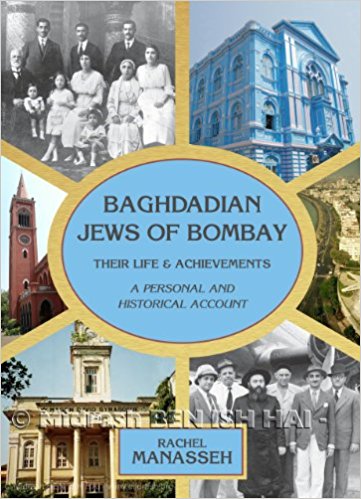
- The Baghdadi Jews of Mumbai and Kolkata
- Books on the Jews of India
The question of how Indian Jews have been portrayed in Indian literature and cinema touches on fundamental questions about how majority cultures represent religious minorities, and about the relationship between artistic representation and social reality. Indian Jews, despite their long presence on the subcontinent and their significant contributions to Indian commercial and cultural life, have been largely invisible in the mainstream of Indian literature and cinema. When they do appear, the representations are often partial, focusing on exotic or unusual aspects of the community rather than on the ordinary texture of Jewish Indian life.
Indian Jewish Women in Bollywood
The most prominent presence of Indian Jews in mainstream Indian culture has been the Bene Israel actresses who helped found the Hindi film industry in the first half of the twentieth century. Yet these actresses, including Nadira, Pramila, and others, were not typically portrayed as Jewish in their film roles. Their Jewish identity was, in a sense, hidden in plain sight: widely known within the industry and the Jewish community but not the subject of the films in which they appeared. They were Indian actresses who happened to be Jewish, not Jewish actresses playing Jewish characters.
This invisibility of Jewish identity in mainstream Indian cultural representation is partly a reflection of the Indian Jewish communities’ own preference for integration over visibility. Communities that have spent centuries as successful minorities in a non-Jewish society have often found that maintaining a low cultural profile is prudent. But it also reflects the limited interest that mainstream Indian cultural production has historically shown in documenting or celebrating minority religious identities, particularly those that are as numerically small as the Jewish community.
Jewish India in Indian English Literature
The most sustained literary representations of Indian Jewish life have appeared in Indian English fiction, where writers from within the communities have used the novel and the memoir to document their communities’ experiences. Esther David’s novels about Bene Israel life in Ahmedabad and Mumbai are the most widely read examples, but there are other writers, including Meera Mehadevan and scholars who have written academic but narratively engaged accounts of their communities, who have contributed to this emerging tradition of self-representation.
Indian Jewish writers in English face the challenge of addressing two audiences simultaneously: the Indian audience that may not know the Jewish communities exist, and the international Jewish audience that may know that Indian Jewish communities exist but has no sense of their specific cultural character. Successful Indian Jewish literature navigates between these audiences by grounding the specifically Jewish content in the specifically Indian setting in ways that make both legible to readers from either direction.
Documentary Film
Documentary film has been an important medium for representing Indian Jewish communities, both within India and for international audiences. Documentaries on the Bene Israel, the Cochin Jews, and the Baghdadi Jews have been produced by Indian, Israeli, and international filmmakers, bringing visual documentary evidence of these communities’ lives to audiences who might not encounter them through literary or scholarly means. The documentary form, with its combination of historical footage, contemporary interviews, and expert commentary, is particularly well suited to telling the story of communities that have undergone dramatic change within living memory.