
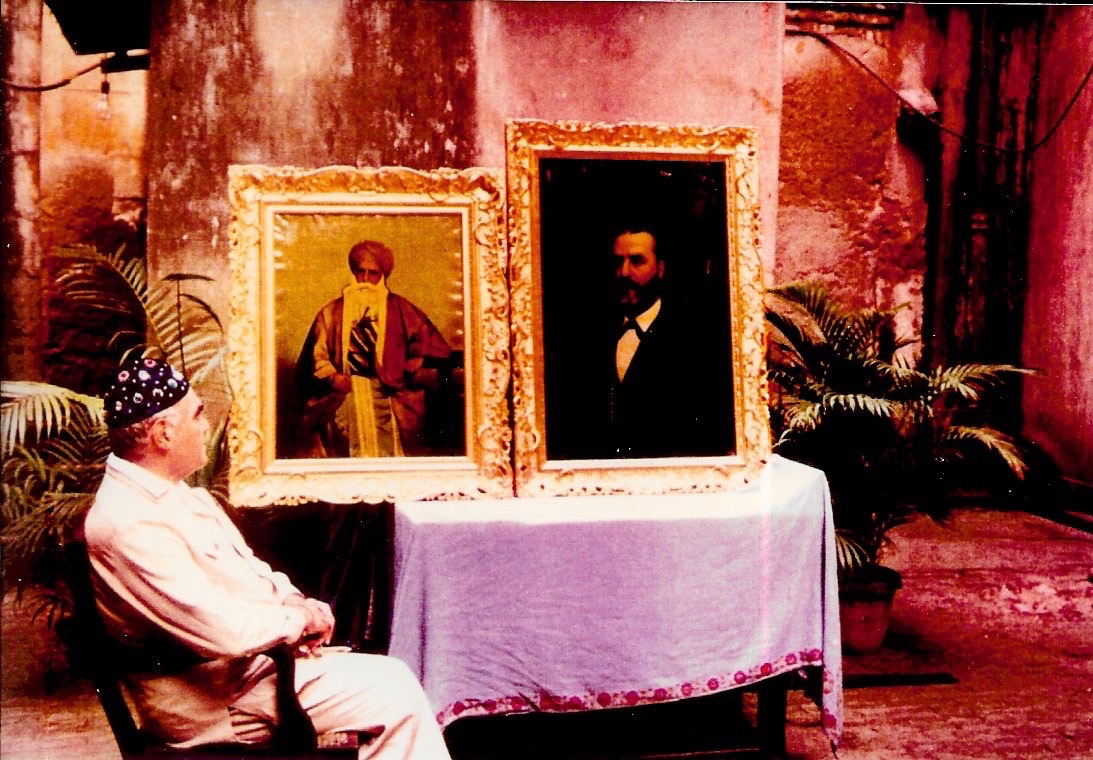
Shirei Hodu: Celebrating the Jewish Saga of India is not a book but the title of a landmark international conference on the art, culture, and heritage of India’s Jewish communities, convened in 2017 at the Indira Gandhi National Centre for the Arts (IGNCA) in New Delhi. The Hebrew title translates roughly as “Songs of India,” and the gathering brought together historians, archivists, and community members to document a set of small, historically distinct Jewish communities whose stories are otherwise at real risk of being lost as their populations continue to shrink through emigration.
A Conference, Not a Book
Because the phrase has circulated online in ways that make it sound like the title of a published book, it is worth being precise about what it actually was: a scholarly conference under the full name “International Conference on Art, Culture and Heritage of the Jews of India,” organized at IGNCA, a premier government-funded arts institution established in 1985 under India’s Ministry of Culture. IGNCA describes its own mission as serving as a resource centre for Indian arts and a venue for research on written, oral, and visual source material relevant to India’s cultural heritage – a mission that made it a natural host for a gathering focused on preserving the documentary record of the country’s Jewish communities.
What the Conference Covered
Presentations at the conference addressed the full range of India’s historic Jewish communities: the ancient Cochin Jews of Kerala, the Bene Israel of the Konkan coast and Bombay, and the more recently arrived Baghdadi Jewish community centered in Calcutta and Bombay. One documented presentation, by the writer and archivist Jael Silliman, was titled “Archival Cartographies: Multi-layering Calcutta’s Baghdadi Jewish Community,” reflecting Silliman’s long-standing work preserving the photographs, letters, and family records of Calcutta’s once-thriving Baghdadi Jewish population. Silliman, whose own family history is rooted in that community, has built one of the most extensive personal archives of Calcutta Jewish life, and her contribution to the IGNCA conference placed that archival work in conversation with scholars studying similar preservation challenges across India’s other Jewish communities.
The Baghdadi Jewish Community of Calcutta
The Baghdadi Jewish presence in India traces back to Middle Eastern Jewish merchants trading with the subcontinent as early as the seventeenth century, with a permanent merchant colony established at Surat in 1730 following the British East India Company’s expansion of trade with Basra. The Calcutta community specifically is often traced to Shalom Cohen, a Baghdadi Jewish trader who served as court jeweller to the Nawab of Awadh and later to Ranjit Singh, the Sikh Empire’s founding leader, before settling in Calcutta and helping to establish its Jewish community. Over the following two centuries, Calcutta’s Baghdadi Jews built synagogues, schools, and a distinct communal identity within the city’s cosmopolitan trading culture, alongside comparable communities that grew in Bombay under families such as the Sassoons.
Like India’s other Jewish communities, the Calcutta Baghdadi Jews experienced a near-total emigration in the decades following Indian independence in 1947, driven by the loss of colonial-era trade networks, the nationalization of businesses across newly independent India and neighboring countries, and the pull of emigration to Israel, the United Kingdom, and Australia. By the 1970s, the once-thriving community had emigrated almost in its entirety, leaving behind synagogues, cemeteries, and a small number of elderly residents as the primary physical evidence of a community that had shaped Calcutta’s commercial and cultural life for generations.
Why Conferences Like This Matter
Events such as the IGNCA gathering serve a function that goes beyond academic exchange. With most of India’s historic Jewish communities reduced to a small fraction of their peak populations, and with many of the individuals who hold direct memories of community life in cities like Calcutta, Bombay, and Cochin now elderly or already gone, conferences that bring together archivists, historians, and remaining community members represent one of the few remaining opportunities to systematically record oral histories, catalogue photographs and documents, and cross-reference the scholarship being produced on different Jewish communities scattered across India’s states. Work like Jael Silliman’s Calcutta archive, presented at gatherings such as this one, forms part of a broader effort across Cochin, Bombay, Pune, and Calcutta to ensure that the documentary record of Indian Jewish life survives even as the communities themselves continue to disperse.
Jael Silliman and the Calcutta Jewish Archive
Jael Silliman, whose presentation at the IGNCA conference anchors much of what is publicly documented about the event, grew up in Calcutta in a Jewish family originally from Aleppo, in modern-day Syria – part of the same broader current of Middle Eastern Jewish migration that brought Baghdadi Jewish merchant families to India’s port cities from the seventeenth century onward. She was educated at Calcutta’s Loreto House before going on to earn degrees from Wellesley College, Harvard University, the University of Texas at Austin, and a doctorate in education from Columbia University. Her professional career has spanned academic posts, including a tenured professorship in Women’s Studies at the University of Iowa, and philanthropic work as a program officer at the Ford Foundation and the Jessie Smith Noyes Foundation, focused on reproductive rights and gender and environment issues.
Alongside this career, Silliman has written extensively about her own community’s history, publishing several books that draw on Calcutta’s Jewish past, including The Teak Almirah (2016), Where Gods Reside (2018, Niyogi Books), ADDA! The College Street Coffee House (2020), and Shalome Rides a Royal Elephant (2023). This body of published work, alongside her personal photographic and documentary archive of Calcutta Jewish life, is what she brought to the IGNCA conference under the title “Archival Cartographies: Multi-layering Calcutta’s Baghdadi Jewish Community” – a presentation about the practical, ongoing work of organizing and preserving a vanishing community’s material record, rather than a finished historical account.
A Conference Spanning All of India’s Jewish Communities
A gathering titled around “celebrating the Jewish saga of India” reflects just how varied that saga actually is. India’s Jewish presence dates to antiquity, with the second-century rabbinic work Mishnat Rabbi Eliezer already referencing Jewish practice on the subcontinent, and Desi Jewish communities surviving for centuries in relative isolation from the rest of world Jewry. Alongside the ancient Cochin Jewish community of Kerala and the Bene Israel of the Konkan coast, later centuries brought the Baghdadi Jewish merchant families documented in Jael Silliman’s Calcutta-focused presentation, as well as much more recently recognized groups such as the Bnei Menashe of Mizoram and Manipur in India’s northeast, whose claim to Israelite descent has been the subject of ongoing scholarly and religious debate. A conference bringing together researchers working on all of these distinct communities, each with its own migration history, language, and relationship to mainstream Indian society, is itself a rare and valuable act of consolidation for a field that is otherwise scattered across specialists who rarely work in the same room.
The “art and culture” framing of the conference is not incidental. India’s Jewish communities have contributed disproportionately to Indian cultural life relative to their small size – Bene Israel actors, actresses, producers, and directors were prominent figures in the early twentieth-century Indian film industry, for instance, at a time when the community still numbered in the tens of thousands. That population fell sharply after 1947 and 1948, from a peak of roughly 20,000 in 1951 to around 5,500 by 1971, as emigration to Israel and elsewhere accelerated. Framing a conference around cultural “songs” and “sagas” rather than purely academic history reflects an attempt to capture this fuller picture: not just population statistics and migration dates, but the lived cultural texture of communities that shaped Indian cinema, cuisine, and civic life long before most of their members left the country.
In practice, archival projects of the kind Silliman described typically draw on several kinds of surviving material: family photographs and correspondence, synagogue membership and marriage records, gravestone inscriptions from community cemeteries, oral history interviews with elderly community members still living in India or recently emigrated, and physical objects such as ritual items, ketubot (marriage contracts), and prayer books. Cross-referencing these sources allows researchers to reconstruct not just genealogies but the texture of everyday communal life – which synagogues a family attended, which streets and neighborhoods were considered part of the Jewish quarter, and how community institutions such as schools and charitable societies functioned. For a community as small and geographically dispersed today as Calcutta’s Baghdadi Jews, this kind of granular documentation is often the only way such details survive at all once the last residents who remember them are gone.
Further Reading
For more on the community discussed in Jael Silliman’s presentation, see our other articles on Baghdadi Jews and Calcutta’s Jewish history, as well as the Wikipedia articles on Baghdadi Jews and the Indira Gandhi National Centre for the Arts.