
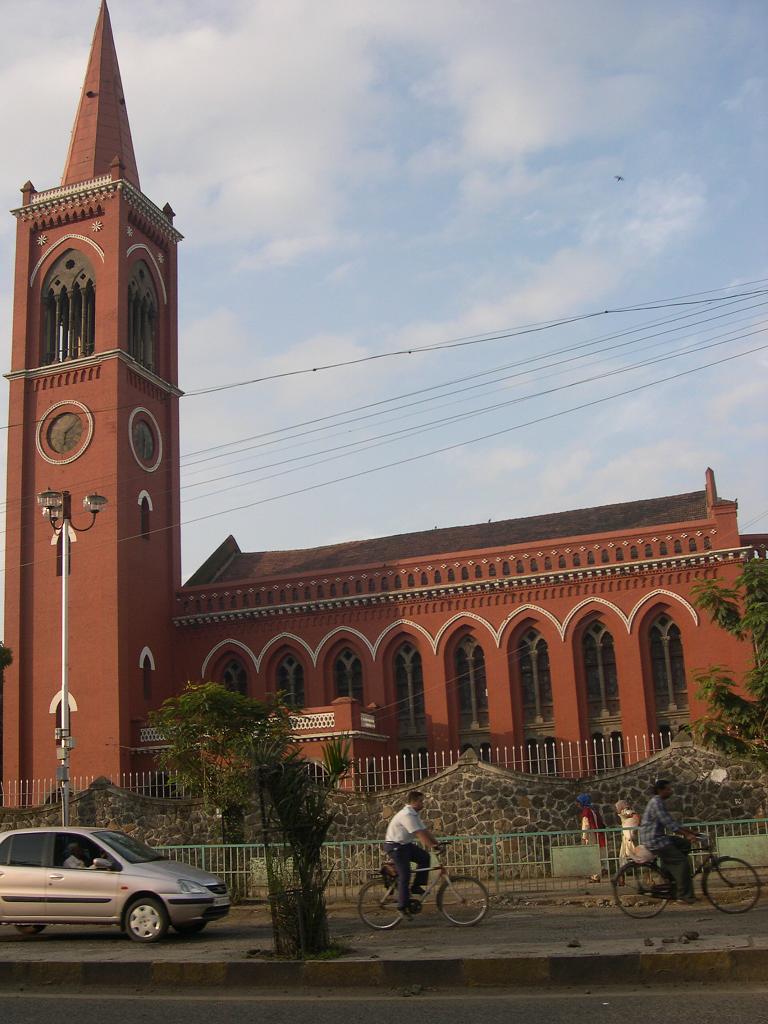
Indian Jews are, by most measures, one of the least-known Jewish communities in the world, despite a documented history stretching back roughly two thousand years and a genuine diversity that goes well beyond the three groups, Cochin Jews, Bene Israel, and Baghdadi Jews, most commonly discussed. In fact, historians identify seven distinct Jewish groups that have existed in India, and the community’s earliest documented mention predates most other diaspora Jewish communities’ own historical records by many centuries.
A Mention from the Second Century
The earliest known reference to Jews in India comes not from an Indian source but from a rabbinic text: Rabbi Eliezer ben Jose, writing in the second century CE in his work Mishnat Rabbi Eliezer, mentions Jewish people of India, referring to them in Hebrew as Hindu’im, and specifically discusses a practical religious question about how they should time their prayers for rain given India’s different seasonal rainfall pattern compared to the Land of Israel. That a rabbinic authority two thousand years ago was already fielding specific religious questions from an established Jewish community in India indicates just how early and how thoroughly settled this diaspora presence already was, centuries before most of the historical episodes typically associated with Jewish diaspora history in Europe had even begun. The specific liturgical question Rabbi Eliezer ben Jose addressed, whether Indian Jews should follow the prayer formula associated with the rainy season used in the Land of Israel or adapt it to India’s own distinct monsoon pattern, reveals something important beyond mere historical trivia: it shows that by the second century, Indian Jewish religious practice was already sufficiently established and sufficiently well-known to rabbinic authorities elsewhere that it merited specific halachic consideration, rather than being dismissed as a distant, unverified rumor of Jewish presence in a far-off land.
Seven Groups, Not Three
Beyond the Cochin Jews, Bene Israel, and Baghdadi Jews covered most often in general accounts, scholars including Shalva Weil have documented at least four additional distinct Jewish groups connected to India. Madras Jews were Sephardic and Ashkenazi diamond merchants, many descended from families expelled from Iberia by the 1492 Alhambra Decree, who settled in Madras during the sixteenth century and eventually learned Tamil and Judeo-Malayalam from the Malabar Jewish communities they traded alongside. Nagercoil Jews, sometimes called Syrian or Musta’arabi Jews, were Arab Jewish merchants who settled around Nagercoil and Kanyakumari District, reportedly arriving as early as 52 CE alongside the legendary arrival of Thomas the Apostle, eventually relocating to Cochin and then emigrating to Israel by the early twentieth century. Historians Daniel Tyerman and George Bennett, writing in the nineteenth century, attributed the Nagercoil Jewish community’s choice of settlement location specifically to the town’s favorable climate and its already-significant Christian population, suggesting that this small Jewish trading community deliberately sought out a religiously plural environment where their own minority status would draw less attention than it might have in a more religiously homogeneous setting, a pattern of strategic settlement choice that likely applied, in varying forms, to several of India’s smaller Jewish trading communities beyond Nagercoil specifically. The Jews of Goa were Sephardic refugees from Spain and Portugal who fled to the Portuguese colony following the onset of the Inquisition in Iberia, a community whose presence later intersected tragically with the Goa Inquisition once Portuguese religious persecution followed them across the ocean. The Goa community’s experience stands apart from the other six groups discussed here in one crucial respect: rather than finding refuge from persecution in India, as most of these communities’ founding narratives describe, the Jews of Goa discovered that the same Portuguese religious authorities they had fled Iberia to escape eventually followed them across the Indian Ocean and reestablished an Inquisition tribunal on Indian soil itself, beginning in 1560. This makes Goa the one significant exception within India’s broader history of Jewish communities largely spared organized persecution, and it is an exception explained entirely by transplanted European colonial religious politics rather than by anything in the surrounding Indian society. Alongside these are the Bnei Menashe of India’s northeastern hill states, whose claimed descent from the Lost Tribe of Manasseh represents the most recently formed and most actively contested of all seven groups. Each of these lesser-known groups developed distinct linguistic and cultural adaptations specific to their particular region of settlement: Madras Jews, though originally speaking Judeo-Spanish or Ladino, learned Tamil and Judeo-Malayalam from the Malabar Jewish communities they traded alongside, while maintaining their diamond trading connections back to Europe using exactly the multilingual skill set that made them commercially valuable to local rulers and trading partners alike. This pattern, small Jewish trading communities absorbing local languages and customs while maintaining specific commercial specializations that justified their continued welcome, repeats across nearly all seven groups despite their otherwise quite different origins and time periods of arrival.
From Tens of Thousands to a Few Thousand
India’s Jewish population peaked at somewhere between 20,000 and 50,000 people in the mid-1940s, according to differing historical estimates, concentrated primarily among the Bene Israel and Baghdadi Jewish communities of Bombay and Calcutta. Following Indian independence in 1947 and the founding of Israel in 1948, the community declined rapidly through voluntary emigration, and the most recent Indian census recorded the Jewish population at just 4,429 people nationwide, a decline of roughly ninety percent from the community’s twentieth-century peak within less than three generations. This decline unfolded unevenly across India’s different Jewish groups: the Baghdadi Jewish communities of Bombay and Calcutta, along with the Bene Israel, accounted for the overwhelming majority of the mid-century population peak and experienced the most dramatic subsequent emigration, while smaller, already-diminished groups like the Nagercoil and Madras Jews had in many cases relocated or merged into larger communities like the Cochin Jews well before the mid-twentieth-century peak was even reached, making their distinct group identities difficult to trace in population statistics from that period onward.
Why So Few People Know This History
Several factors explain why Indian Jewish history remains so little-known outside a small circle of specialists, even among people generally well-informed about Jewish history elsewhere in the world. India’s Jewish communities never experienced the kind of large-scale, well-documented catastrophe, expulsion, pogrom, genocide, that tends to fix a diaspora community’s history firmly in global historical memory; their story is instead one of slow, voluntary demographic decline through emigration, a less dramatic narrative that rarely receives comparable historical attention. Additionally, because India’s Jewish communities never numbered more than a small fraction of India’s overall population or, at their peak, more than a modest fraction of global Jewish population figures, they simply lacked the numerical scale that tends to attract sustained international scholarly and popular attention. The comparative absence of large-scale violence also means Indian Jewish history rarely appears in the school curricula, documentaries, or popular histories that shape most people’s general awareness of Jewish diaspora history worldwide, since those popular accounts tend to organize themselves around dramatic, well-documented events with clear villains and victims, a narrative structure India’s slow, largely voluntary demographic decline simply does not provide in the same way. The result is a curious asymmetry: a community with one of the longest continuously documented histories of any Jewish diaspora population remains, in terms of general public awareness, one of the least recognized.
Why This Matters Now
With the total Indian Jewish population down to a few thousand people, and with several of the seven historical groups already effectively extinct as living communities within India itself, the window for documenting this history through direct testimony from people who lived it continues to narrow. Recovering the full breadth of Indian Jewish history, not just the three most commonly cited communities but all seven distinct groups scholars have identified, has become an increasingly urgent task precisely because so much of this rich, two-thousand-year-old heritage risks being reduced to a handful of familiar anecdotes rather than understood in its full historical complexity.
Museums, digital archives, and heritage preservation projects across Kochi, Mumbai, and Kolkata have taken up parts of this task in recent years, restoring synagogue buildings, digitizing communal records, and collecting oral histories from the dwindling number of community elders who still remember pre-emigration Jewish life in India firsthand. But these efforts remain scattered across individual cities and communities rather than coordinated into anything resembling a single comprehensive national record, meaning much of the responsibility for connecting these seven distinct historical threads into one coherent picture continues to fall on individual scholars, family historians, and small independent projects rather than any single well-funded institutional effort comparable to those documenting larger diaspora communities elsewhere in the world.
Until that changes, articles, archives, and community-driven documentation projects like this one remain some of the only places where the full seven-group picture of Indian Jewish history gets told at all.
Further Reading
For more on India’s Jewish communities, see our coverage of the Bene Israel of Maharashtra, the Jews of Cochin, and the Baghdadi Jews of Mumbai and Kolkata, as well as the Wikipedia article on the History of the Jews in India.